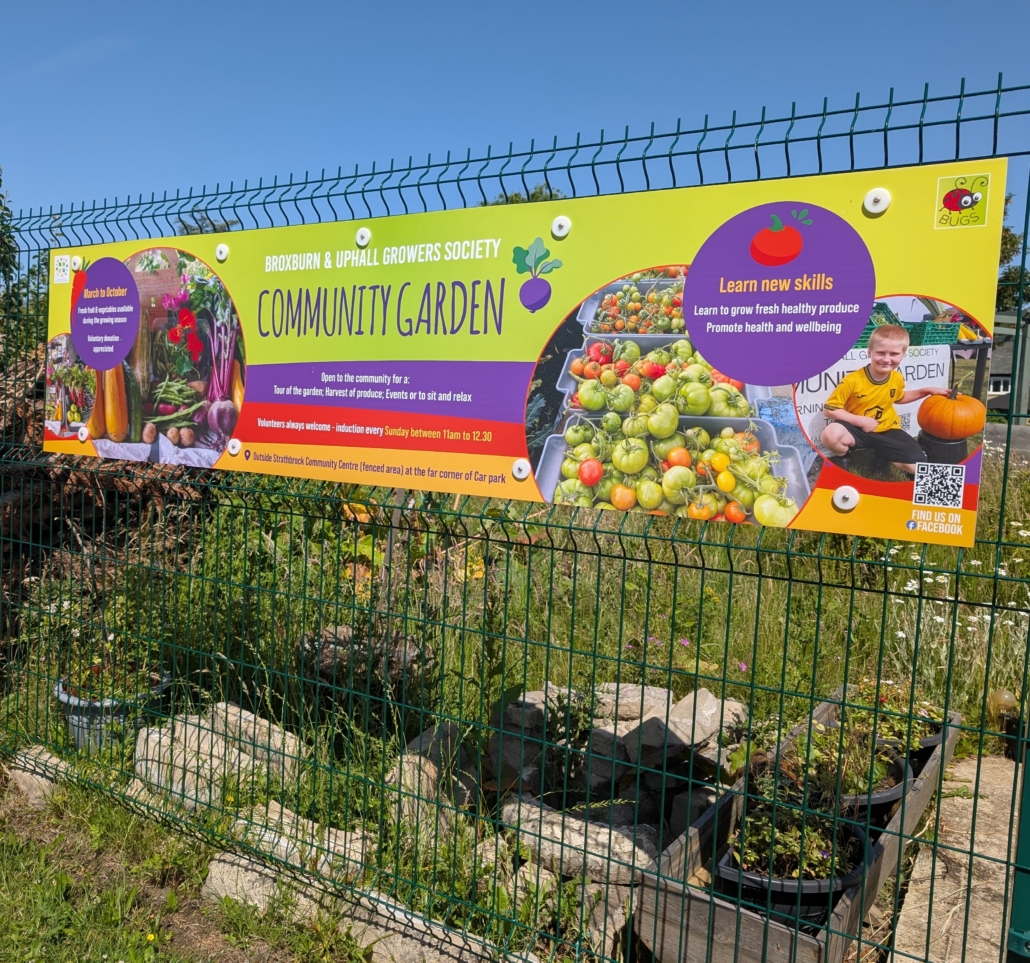
Broxburn Uphall Growers Society.
Supported by the Eco Development Fund

Supported by the Eco Development Fund
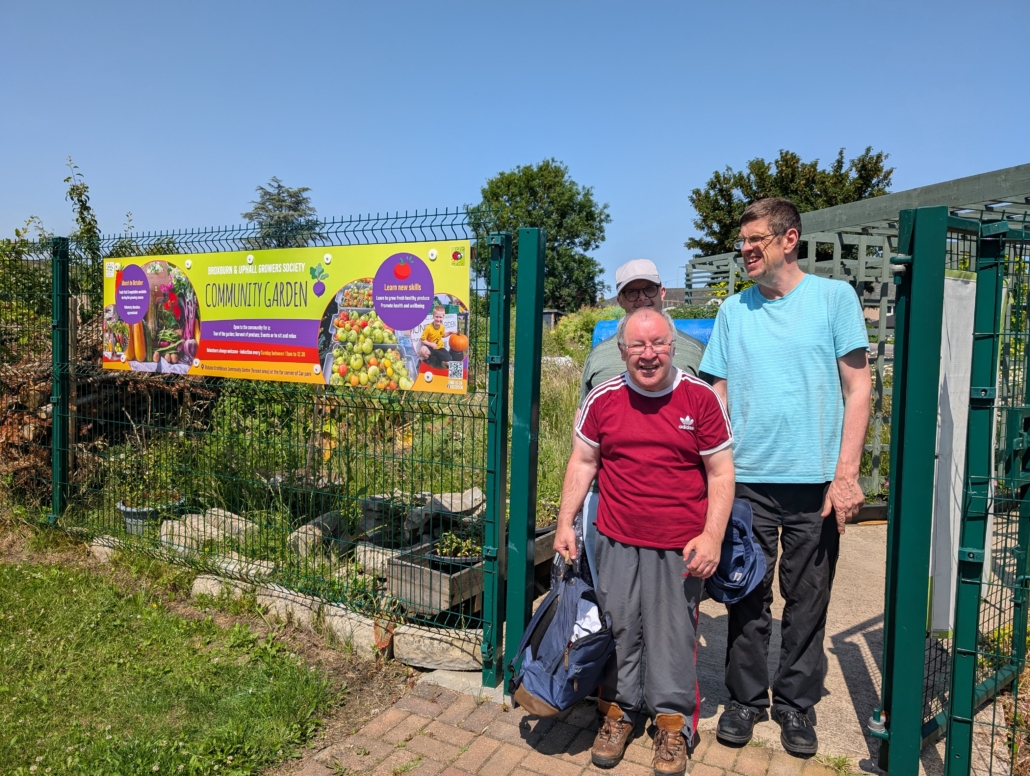
Broxburn and Uphall Growers’ Society is transforming its community garden with sustainable energy and watering. Faster composting, biological pest controls, and reusing wood to build sheds are some other examples of the forward thinking at the garden that has made it such a stand-out example of what can be achieved in only four years.
Strathbrock Community Garden’s journey started in 2022 with the laying of beds, pond, composters and polytunnel to facilitate work with schools and community groups. The volunteer-led group then conducted a successful growing trial using electroculture to direct atmospheric energy into the soil of its vegetable beds.
The gardeners then set their sights on further developments and applied to the Eco Fund to bring renewable energy into the garden and adapt for growing in extreme heat and cold, with an automated water system and propagation mats. Reusing wood to build sheds, solar panel frames and hot boxes to speed up composting come as standard in this dynamic and innovative garden.
BUGS received funding in autumn 2025 to start installing solar and wind technology. The volunteers researched other gardens who had fitted renewable power sources – Livingston Community Shed, Winchburgh Community Garden and West Lothian Youth Action Project.
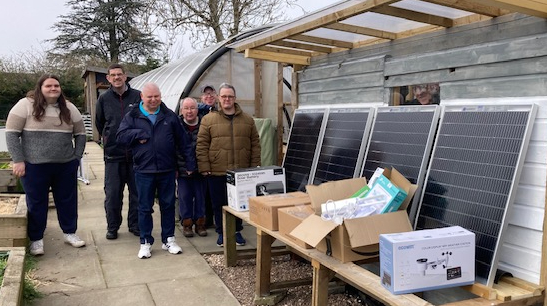
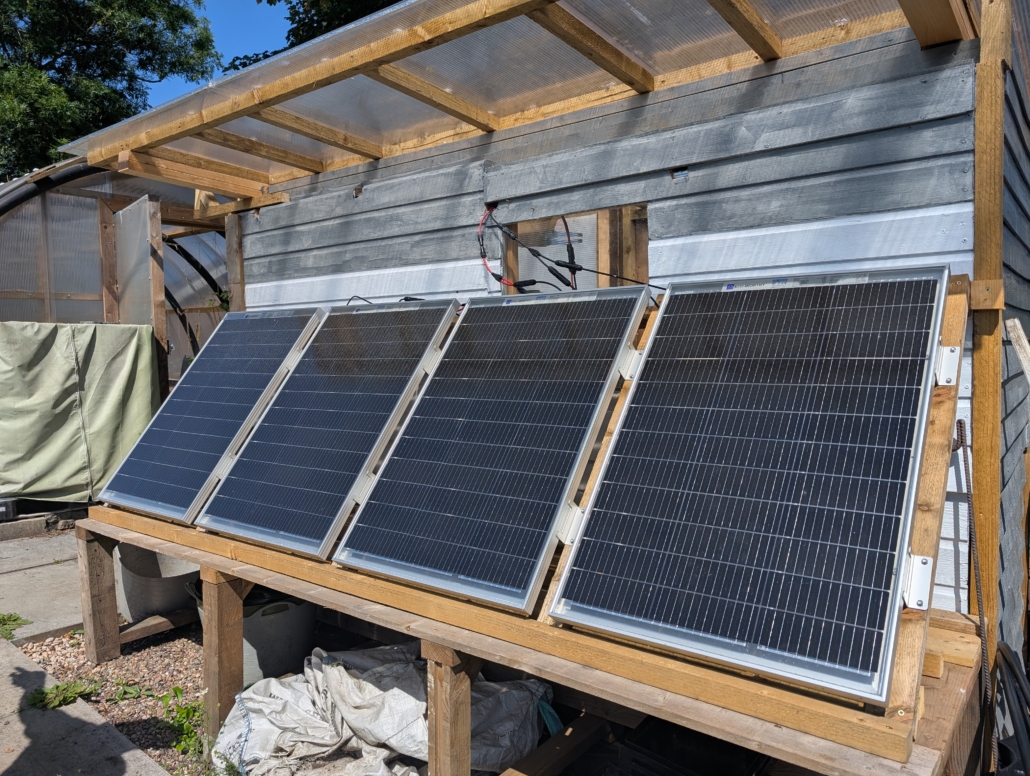
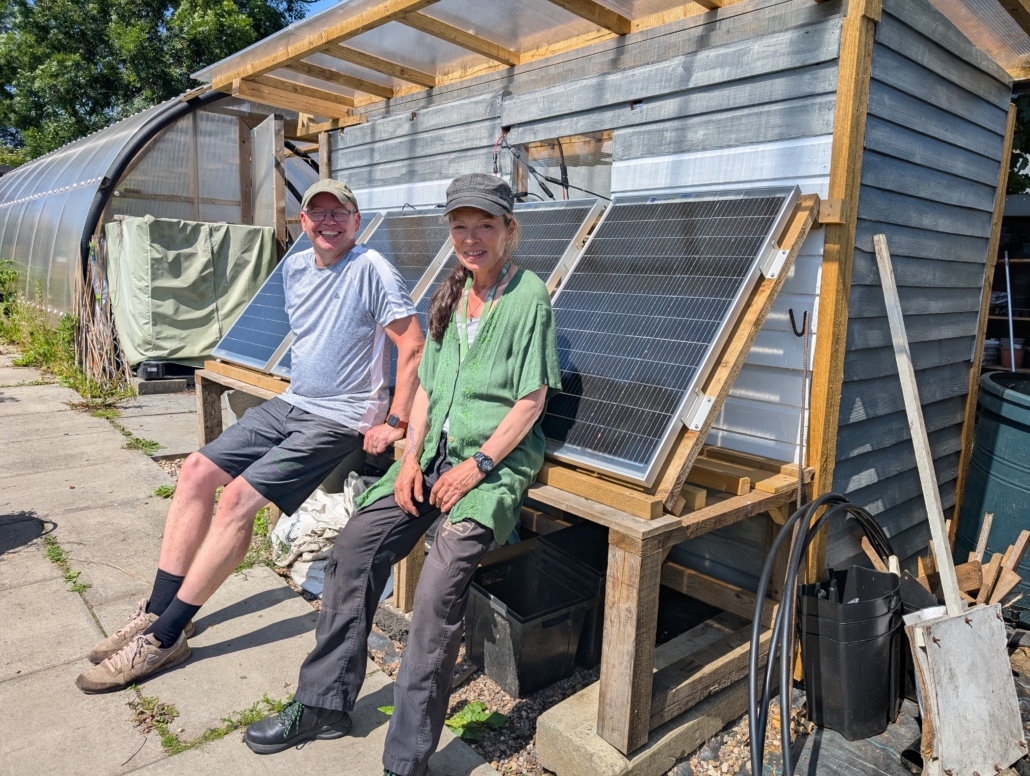
The construction has been overseen and largely done by project lead Graeme Roy, who turned to YouTube for installation knowledge. By the end of 2025 they had bought a small wind turbine, five 120W solar panels, a wind/solar controller unit, and a large battery along with some wiring and other components. Reusing wood and materials led to savings which could then be used for security cameras, wifi equipment and remote management. Smaller items included ventilation fans, propagation heating mats, lighting and a small heater.
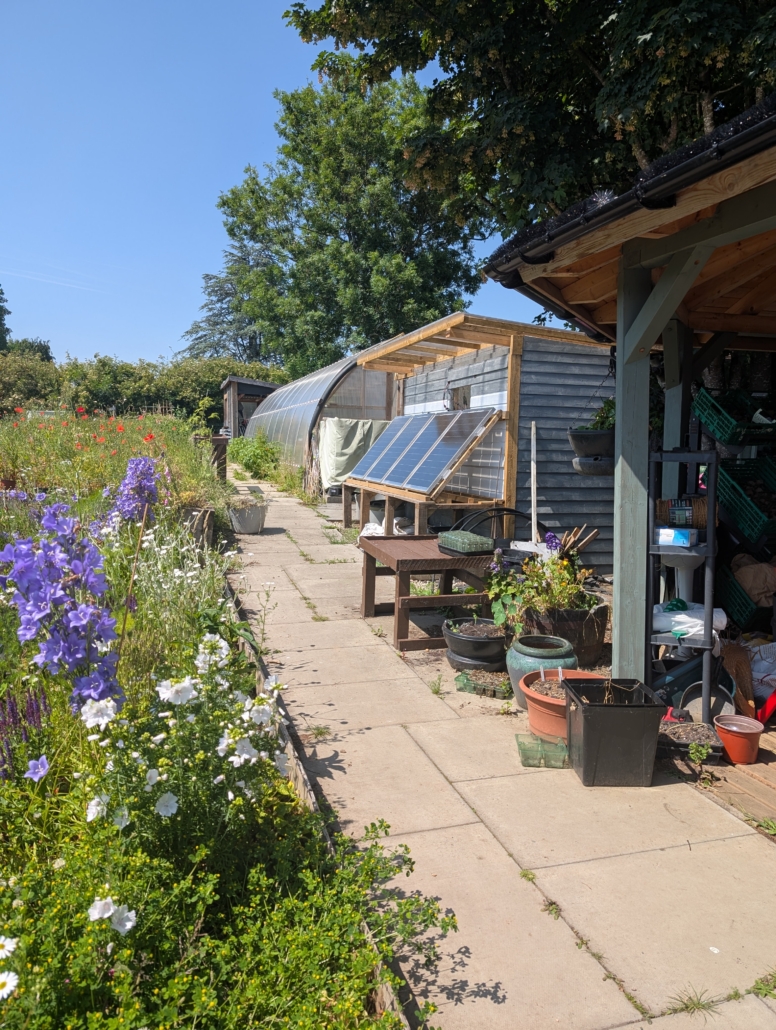
The first site identified for the panels was unsuitable due to its angle for sunlight. A platform was built for the panels along with a shed for the propagation station. This was made from recycled wood collected over the year. The site was cleared and construction took place in January and February. Funding also provided polycarbonate roofing sheets to protect the solar panels and allow light into the propagation area. Guttering has been fitted to harvest rainwater runoff into a donated waterbutt.
A team from Pathways, which works with adults who have learning difficulties, painted the shed. By March 2026 they were fitting out the interior with second-hand insulation and boards before the final installation of the electrical equipment.
The next stage is to connect the wiring to allow power from the station to reach the polytunnel, and set up the watering system. With only rainwater available, the system will time the watering to avoid waste and even allow for remote control using wifi that is already connected through solar power. The Watermate (UK designed and built) system will water the 40m2 tunnel flexibly to the garden’s design and requirements, using power from the solar shed and water from an adjacent IBC. The system adjusts water depending on the tunnel conditions and can deliver water by drippers direct to the plants, or overhead by sprayers and at times when lower evaporation means less waste. This should lead to healthier plants thanks to consistent watering, significant time savings for volunteers and more efficient use of limited rainwater harvested resources.
The wiring will require additional expertise, as will the wind turbine, which will need to be welded to ensure it is in place for when solar capacity wanes later in the year and power is needed for heat.
“These systems will have cascading benefits to growing and waste reduction. Faster seed germination, increased growing period, bigger harvests for distribution in the community.”
The progress is remarkable not just because of the technical installation. It isn’t about bling. These systems will have cascading benefits to growing and waste reduction. There will be faster seed germination using the heated propagator and lights; An increased growing period and bigger harvests available for distribution to the community and over a longer period; Recharging of power tools needed for water pumps; Portable power to help keep seedlings alive during periods of low light and wind where power supply is low; Ability to remotely monitor items such as the weather station and automated tunnel watering, increasing their efficiency and providing camera security; More on offer to the community because of the ability to heat water for refreshments, and dish washing.
The composting hot box was built using insulation panels and hinges purchased along with some timber and other materials from the garden’s own resources. This will allow the volunteers to fast-cook some food waste mixtures and produce high quality compost in a shorter time, reducing reliance on compost imported into the garden. Just as with electroculture, the results will be assessed and if very successful, could be scaled up.
The attention to detail in the processes and desire for sustainable, nature-based solutions, extends to the tiniest signs of life. BUGS found itself fighting bugs – wireworms or beetle larvae – which damage the roots and tubers of vegetables and caused a lot of wastage, particularly in potatoes. Again through the Eco Fund, they bought enough biological nematodes to treat all the beds at least once.
A weather station was also bought and will keep an electronic record of conditions over a period of time. This will be cross-referenced against crop performance in the longer term.
Two different water butt treatments will help keep the IBCs and seven water butts clear and safe to use. One is based on organic bacteria cleaning the water and the other is a plant based non-toxic cleaner. Harvested rainwater is the only water source and so these will hopefully keep the winter-stored water sweet throughout the growing season. Each feature that is added to the garden is made with a commitment to measuring results and responding to climate change across several themes.
This joined-up thinking will help BUGS make the most of year-round growing in all weathers, and the community around them will benefit.