West Lothian College.
Supported by the Eco Development Fund

Supported by the Eco Development Fund
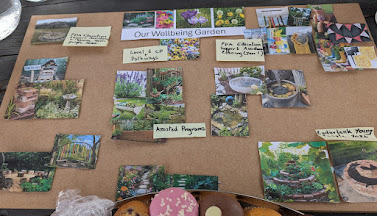
The Well-being Garden project at West Lothian College offers a valuable insight into how a forward-thinking initiative can make a significant impact on both the environment and the community.
The enthusiasm of staff, students and visiting organisations is evident. Their shared commitment has created a vibrant garden where learning truly connects with the environment. When well-being strengthens, confidence grows, and the community flourishes as the environment improves.
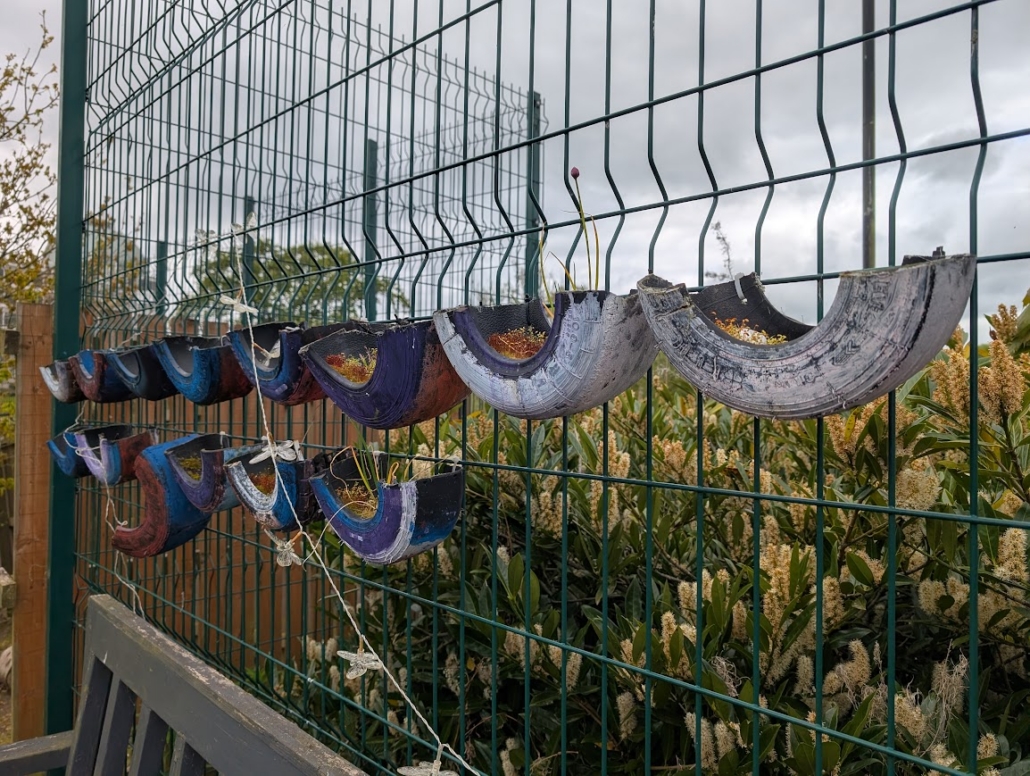
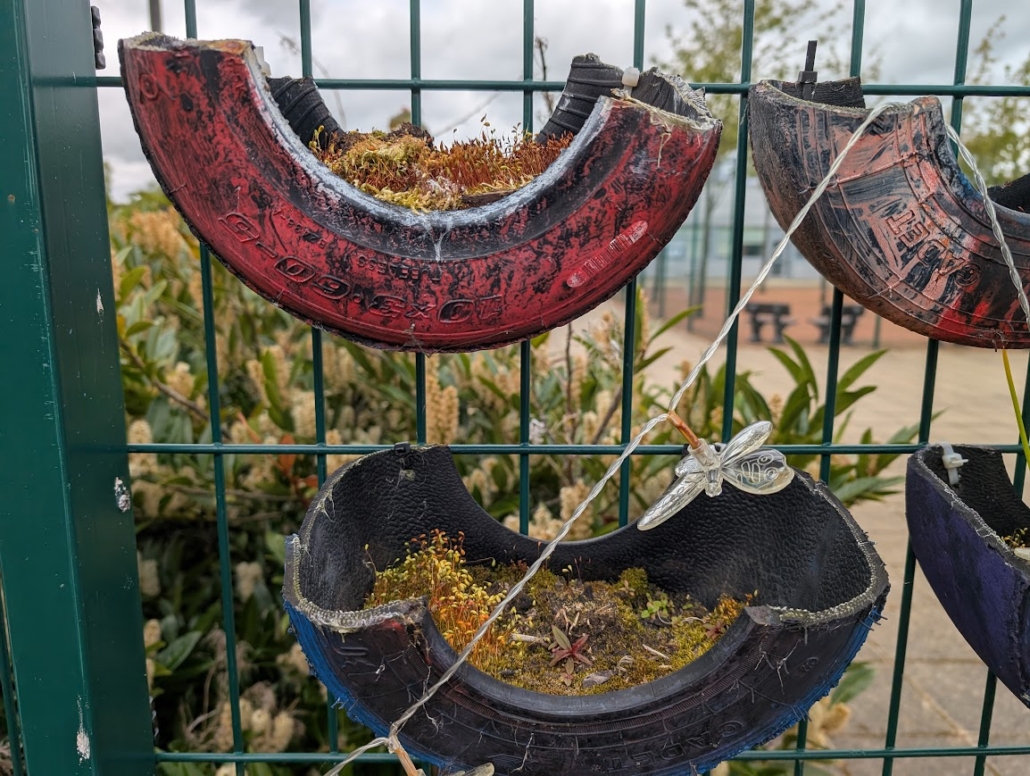
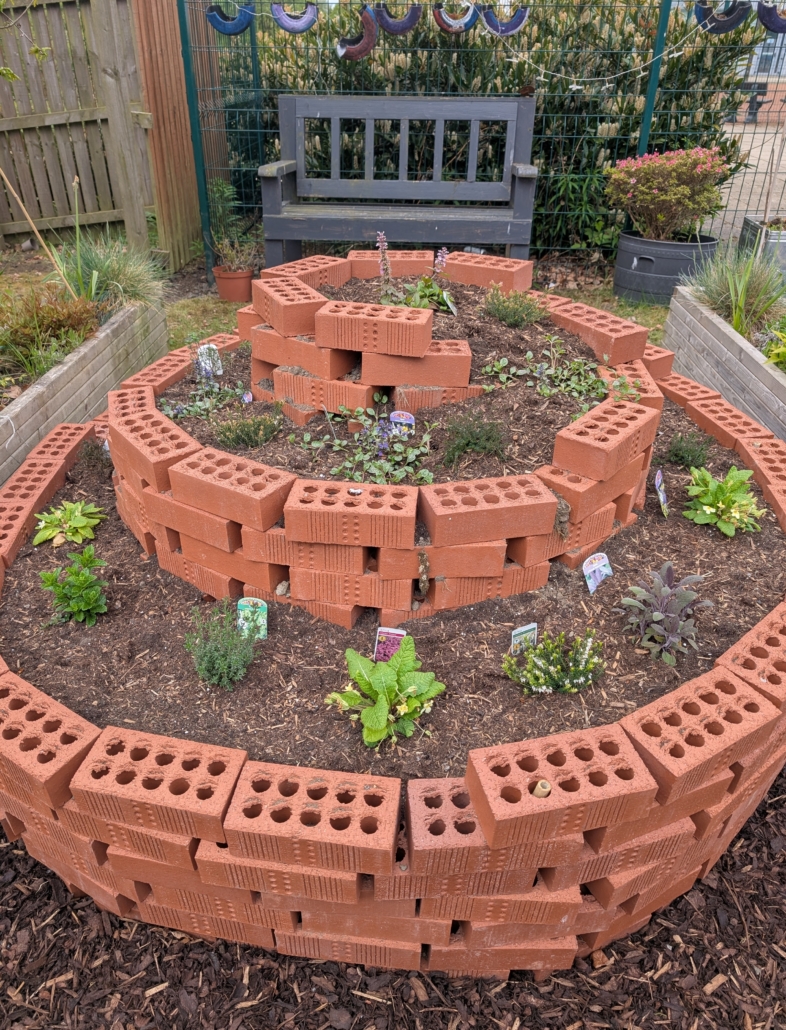
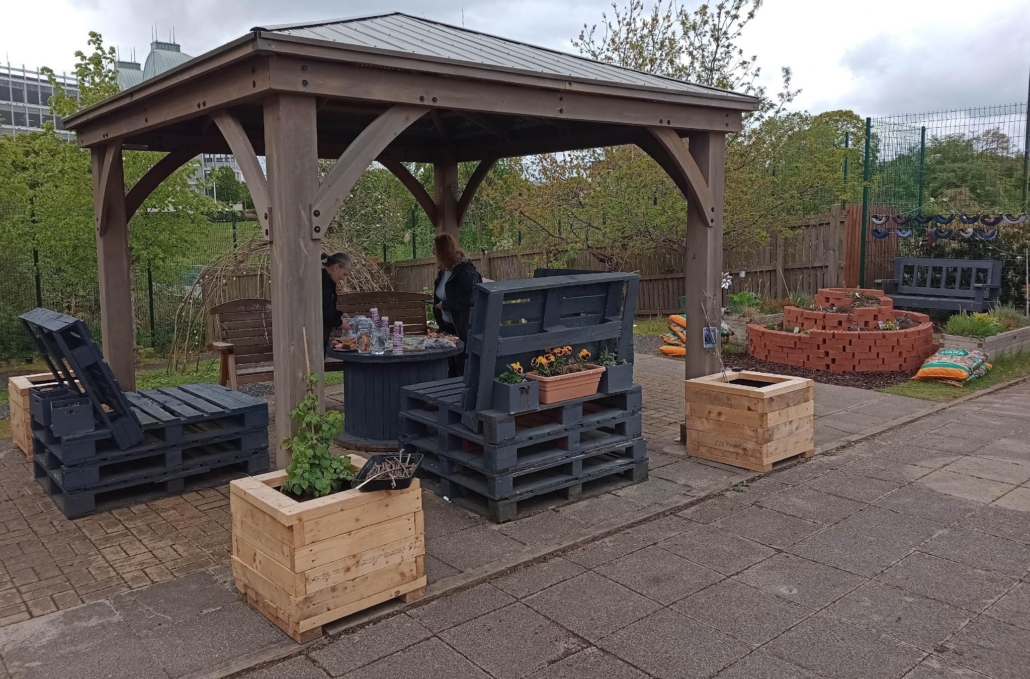
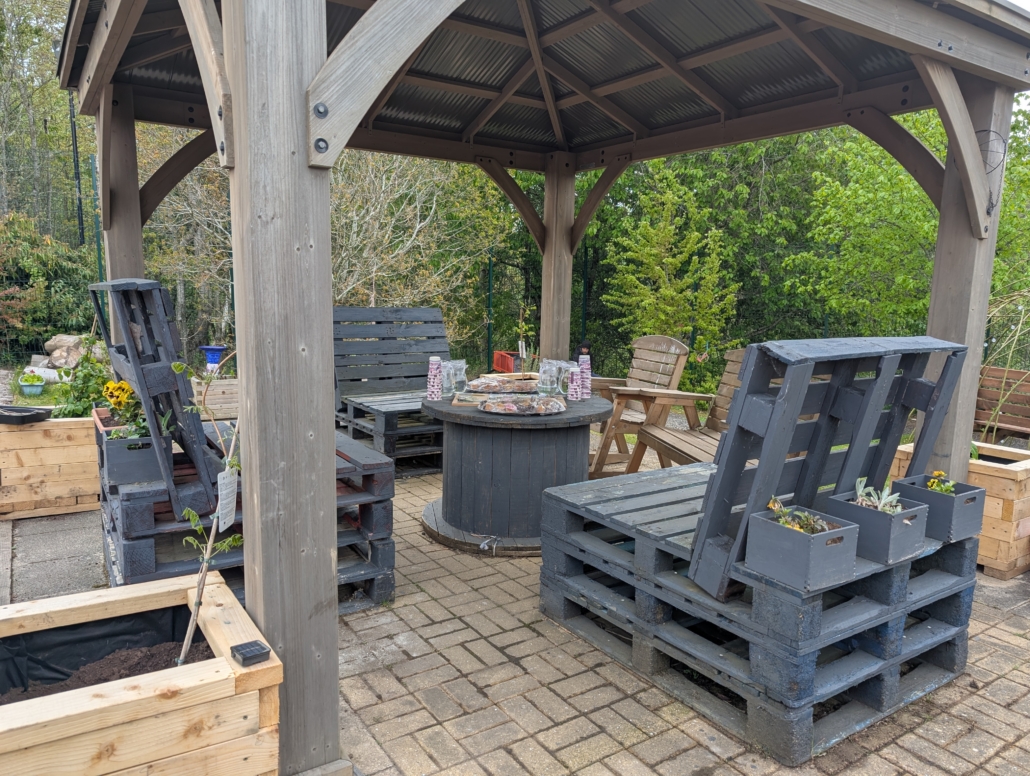
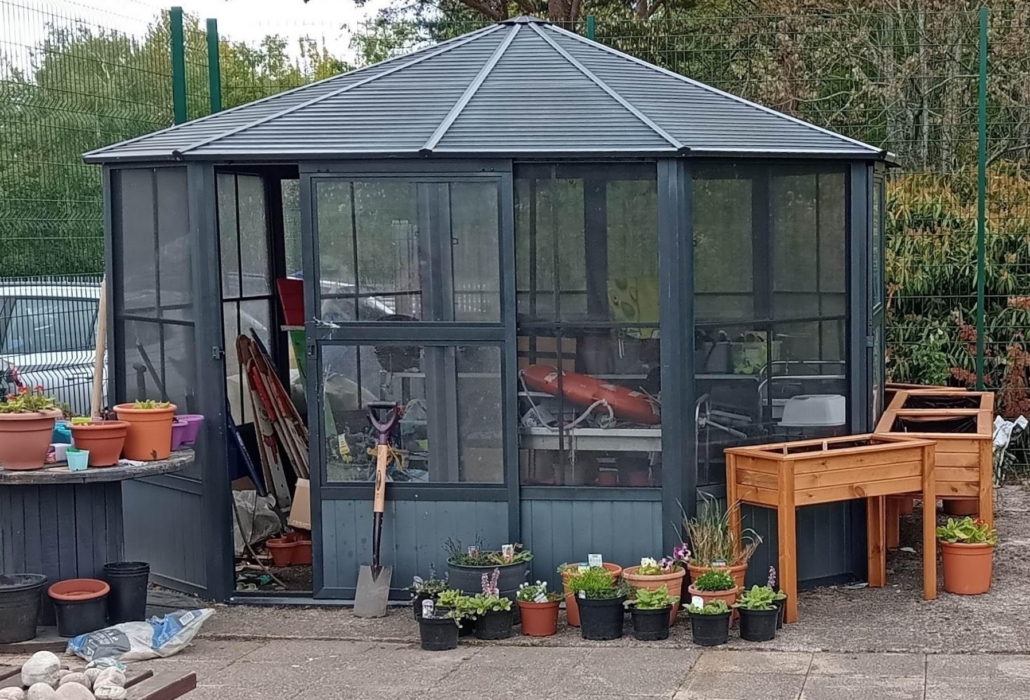
Recycled materials have been transformed into benches, planters, tables and seating. Old tyres now hold vibrant planting, old pallets now provide welcome furniture for meetings and relaxation and features like the willow arbour and herb spiral add beauty, biodiversity and sensory interest.
The garden has helped staff, students and the community to build environmental understanding and practical sustainability skills through hands-on activities that develop real-world solutions.
Pupils from Cedarbank School in Livingston have built many of the upcycled features including pallet seats. Visits and partnership make transition to college easier for young people about to leave school. Outcomes include learning about nature, and creating vegetable planting areas, which will feed into other parts of the college such as its chef training kitchens and sustainability teaching.
The site was unused and surrounded by a laurel hedge. The Eco Fund has paid for this to be replaced with native plants to promote wildlife and biodiversity. The plants will climb the fence and create a haven within the campus to support mental well-being among all students and staff. A secondary audience includes community members and visitors to participate in events, workshops, or educational and inter-generational activities.
Heather Sievewright, who teaches childhood practice, has led the redevelopment of the garden, working with the college estates team. She envisaged an area that would be of practical use for learning in childcare and other teaching subjects, but also a place for well-being. The garden has been designed to provide a space for reflection, decompression, and to stimulate the senses using nature. Evidence overwhelmingly shows improved outcomes for education that includes learning through nature.
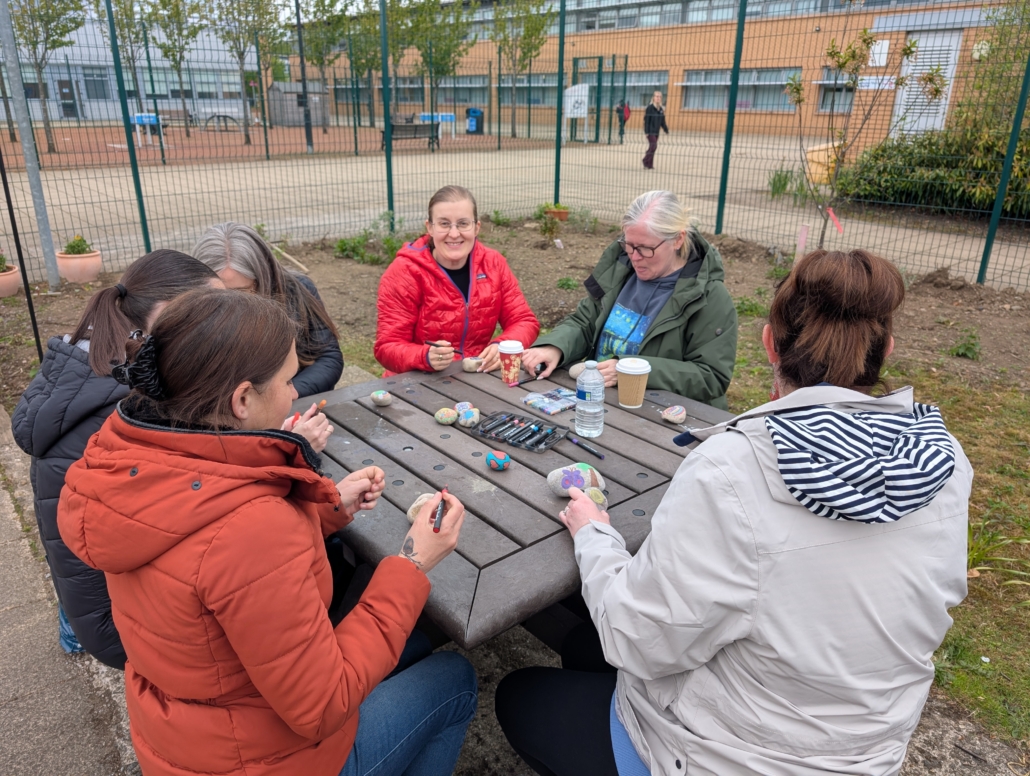
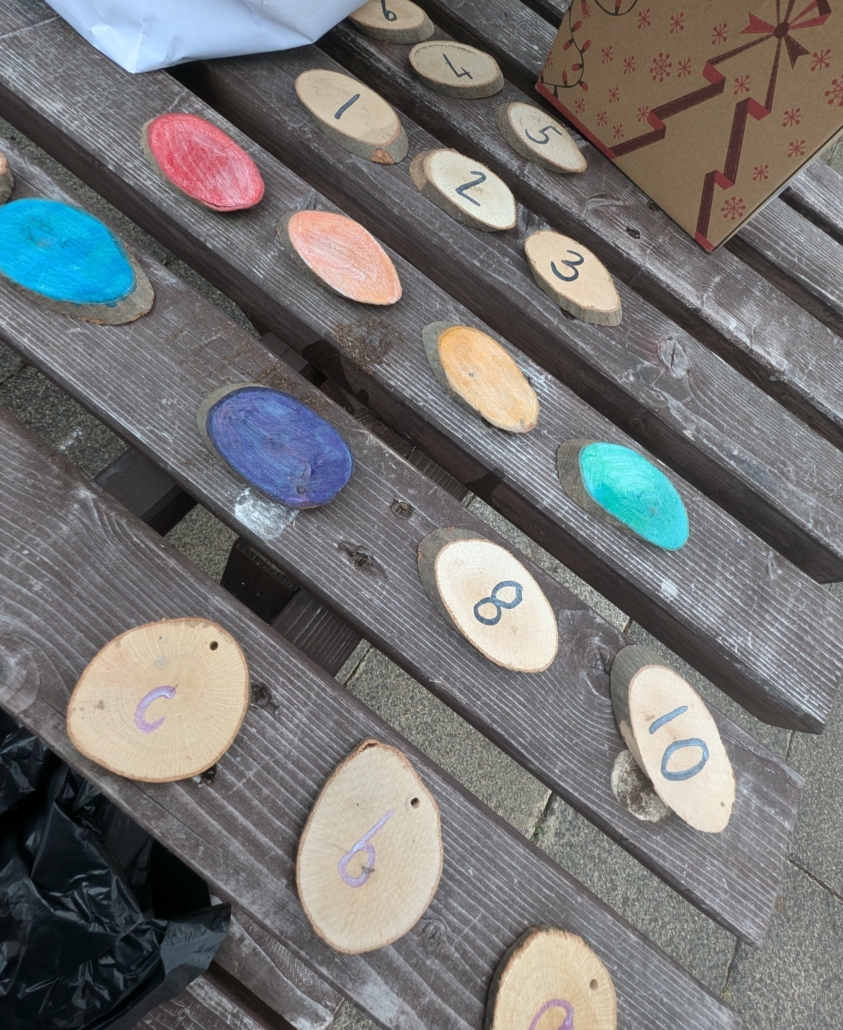
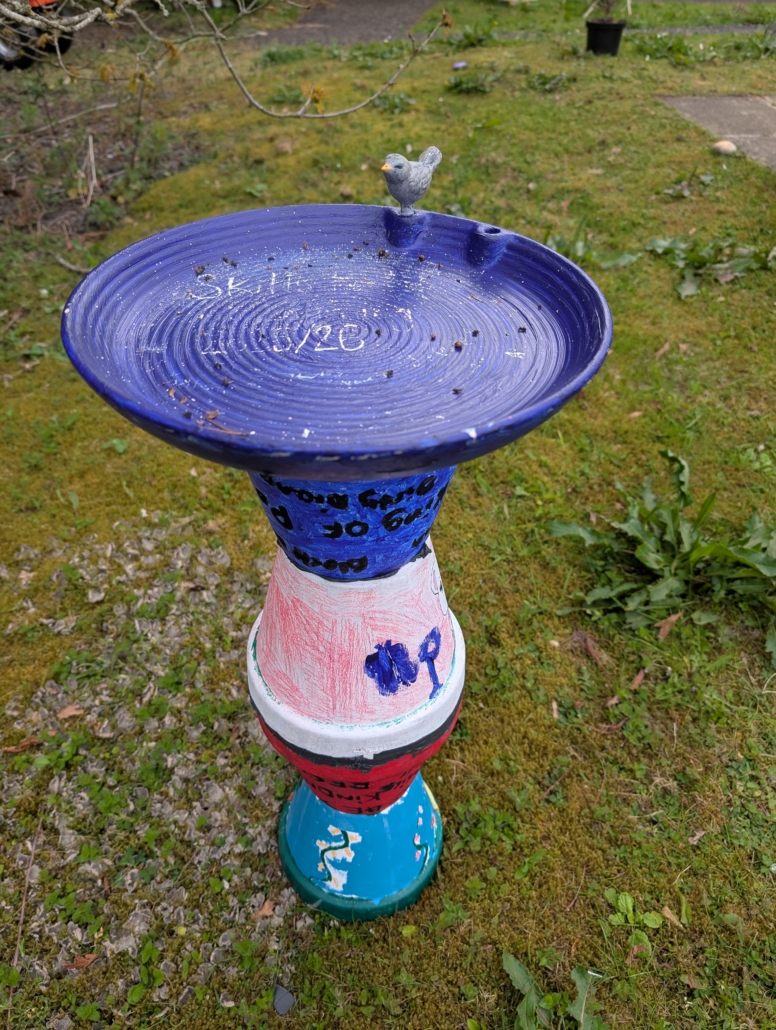
A winding path passes sensory planting features, chimes, a willow arbour and hand-painted ornaments and stones. Students of childhood practice and education support use the garden regularly for workshops including learning how to use art.
Gardening for climate and partnerships:
- Laurel perimeter hedging replaced with wildlife-friendly hedgerow
- Workshop areas for college students and community partners
- Living willow arbour built with Vennie Youth Project
- Herb spiral will support college in catering and sustainability teaching
- Sustainable seats built with reclaimed pallets by pupils from Cedarbank School
This Eco Fund project has shown how small incremental, thoughtful actions can create powerful change. These changes have enhanced the environment, supported well-being and enriched the learning and development of staff and students as they engage with real-life environmental challenges.
Dedicated and passionate practitioners have grown the project from small seeds into an inspiring landscape of community action and environmental change.
The garden is becoming a self-sustaining, living classroom where skills, creativity and purpose come together. It’s a standout example of a well-being garden shaped by imagination, teamwork and a commitment to reuse. Students and staff have created a calm, welcoming space that supports relaxation, learning and environmental awareness.
A journey of a thousand miles begins with one step. The staff, students and external partners have taken that step boldly, creating a safe, joyful, fun and environmentally friendly space that’s already shaping a brighter tomorrow.
Key advantages of the wellbeing garden include:




 Artlink Boghall – the Rain Garden project